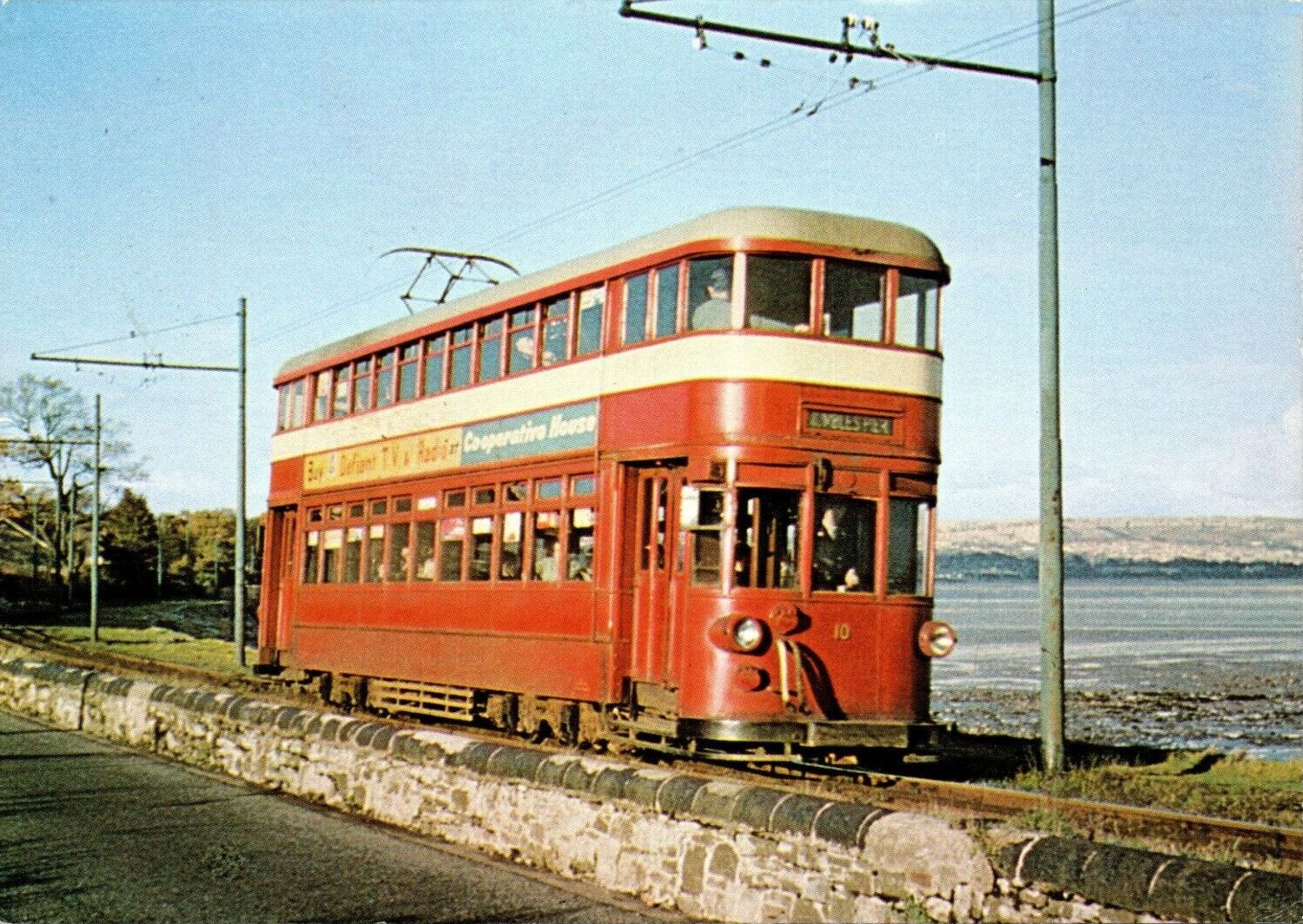
Mumbles train at Blackpill, passing the electricity sub-station which provided the overhead cables with the 660v DC current which powered the train. Although the railway has long since (unfortunately) gone, the building still survives today. The bridge in the background carried the Swansea Bay railway over the Mumbles road and northwards through Clyne valley. (pinterest.com)
This former 5.50 mile (8.85 km) long railway was opened for horse-drawn operation on 25 March 1807 mainly to transport quarried products to the Swansea canal. But it was also the world's first passenger railway. In 1877 steam operation began which lasted until 1929 when the line was electrified at 650 volts DC. The 13 cars were built by Brush Traction at Loughborough and each car seated 106 passengers. The line was shortened for roadworks in October 1959 and closed at the beginning of 1960. It ran from Rutland Street depot in Swansea to Mumbles pier.

The Mumbles Development Trust is proposing a Mumbles Railway Walking Trail from the LC in Swansea to Mumbles Pier along the original route. Replica station signs at the eleven station points along the route would be erected with historical information provided on QR codes. Guided walks would also be provided. A later phase would see the creation of a Mumbles Railway Museum to house many items of associated railway memorabilia and ephemera.
To begin fund raising, Mumbles Development Trust has commissioned a replica badge of the iconic red tram which ran from 1929-1960.