
Saturday, September 13, 2025
Romanian railway poster for trips to Bucovina, early 20th century

NZR Ed class electric locomotive with livestock wagons from Johnsonville, late 1940s

See the books Wellington Transport Memories and The Story of the Wellington to Johnsonville Railway.
Thursday, September 11, 2025


Wednesday, September 10, 2025
about Electric Vehicles a century ago and now
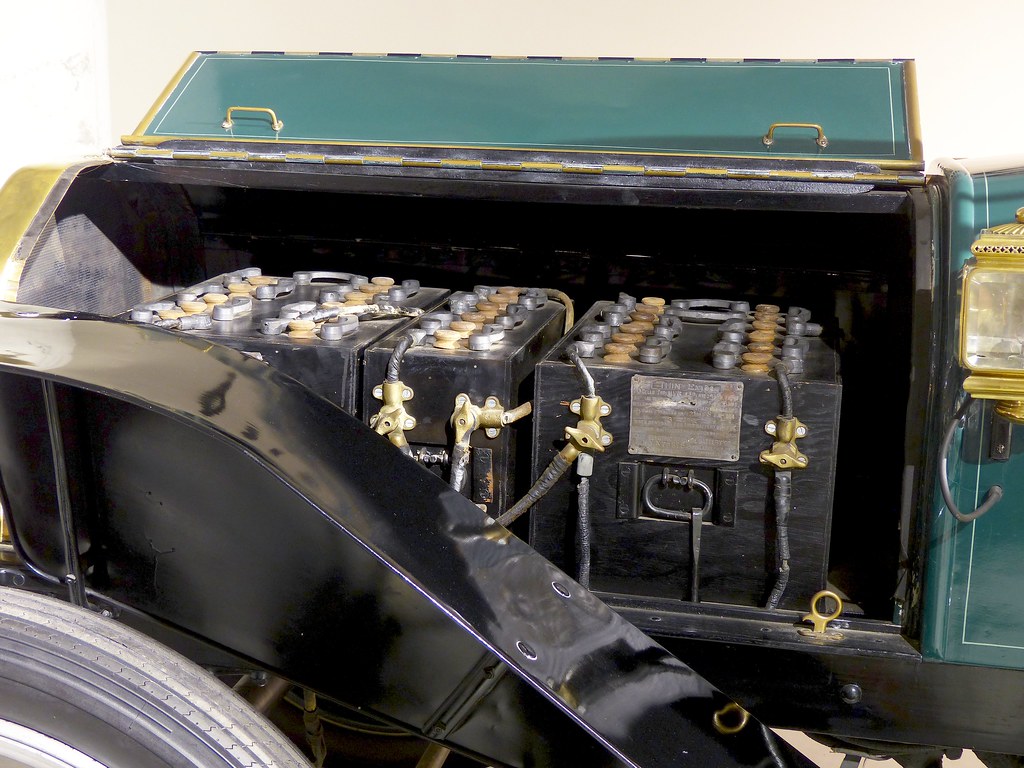
A century ago we could buy a cheap, battery-powered car for short hauls. There was no government subsidy, and it was economical to operate.
From Eric Peters at ericpetersautos.com:

Battery powered devices could be simpler (and cheaper) than vehicles with engines; the fact that they’re neither is precisely why they don’t “work” – and so rely on being pushed by the government. It being always necessary to push that which does not work.

About 100 years ago, there were battery powered vehicles that did work, mainly because they were not pushed by the government and because they were not devices. The distinction is important.
A battery powered vehicle such as the Baker Electrics of 100 years ago were devoid of electronics. They had deep cycle lead acid batteries connected in series and these were in turn connected to the simple electric motor that turned the drive wheels. There was a switch that turned the electricity on and off. But no electronics controlling anything because it wasn’t necessary.
Today’s devices are laden with complicated electronics that negate the inherent simplicity of the electric drivetrain. These include the electronics that control the thermal management system that is necessary to keep relatively fragile (vs. lead acid) lithium battery packs (which have a lattice of individual cells within the pack) from being damaged by extremes of temperature and also to allow for relatively safe high-voltage “fast” charging – without which it is necessary to plan around home charging, which takes many hours if not overnight. High-voltage “fast” charging has been pushed because it is seen as necessary by those pushing today’s devices, which they market as being as practical for everyday use – including long distance driving – as a vehicle powered by an engine.
Continue reading
A battery powered vehicle such as the Baker Electrics of 100 years ago were devoid of electronics. They had deep cycle lead acid batteries connected in series and these were in turn connected to the simple electric motor that turned the drive wheels. There was a switch that turned the electricity on and off. But no electronics controlling anything because it wasn’t necessary.
Today’s devices are laden with complicated electronics that negate the inherent simplicity of the electric drivetrain. These include the electronics that control the thermal management system that is necessary to keep relatively fragile (vs. lead acid) lithium battery packs (which have a lattice of individual cells within the pack) from being damaged by extremes of temperature and also to allow for relatively safe high-voltage “fast” charging – without which it is necessary to plan around home charging, which takes many hours if not overnight. High-voltage “fast” charging has been pushed because it is seen as necessary by those pushing today’s devices, which they market as being as practical for everyday use – including long distance driving – as a vehicle powered by an engine.
Continue reading

old C&W caboose used by Radio Goldfield, Nevada

Although the country radio station is long-established, the caboose base of it was recently set up. Info here
Just across the road is the Goldfield Hotel which was used in the movie Vanishing Point (1971) as the fictional setting of a radio station featuring a black soul DJ who broadcast messages to the rebellious fast car driver of a white 1970 Dodge Challenger (see earlier post). The movie has become a cult classic.
Tuesday, September 9, 2025


Monday, September 8, 2025
1947 British European Airways advertisement with a Vickers Viking piston-engined airliner

The airline was established just after WW2 on 1 January 1946 and lasted until 31 March 1974 when it was absorbed into British Airways, see earlier posts.


Subscribe to:
Posts (Atom)